
Commercial and Industrial Energy Storage Solutions
Felicitysolar offers advanced Commercial and Industrial ESS Solutions, specifically designed for businesses to enhance energy efficiency, reduce operational costs, and support sustainable development. Our C&I energy storage systems, powered by high-performance ESS energy storage systems, help businesses optimize energy storage and use during peak loads, ensuring reliable power supply, cost-effectiveness, and promoting the green energy transition.
Features of C&I Energy Storage Systems
100KW/232KWH Liquid Cooling System
1.Efficient Heat Management
Liquid cooling uses circulating coolant to effectively absorb and dissipate heat from battery components, ensuring optimal thermal regulation. This system prevents overheating and guarantees stable performance, even under high-energy demand.
2.High Performance
Ideal for large-scale ESS energy storage systems, liquid cooling is engineered to handle high energy throughput, making it perfect for commercial and industrial applications that require consistent and reliable energy storage operation.
3.Space & Noise Efficiency
Unlike air cooling, liquid cooling systems take up less physical space and operate quietly, making them an ideal solution for installations where space is limited or where noise reduction is important.
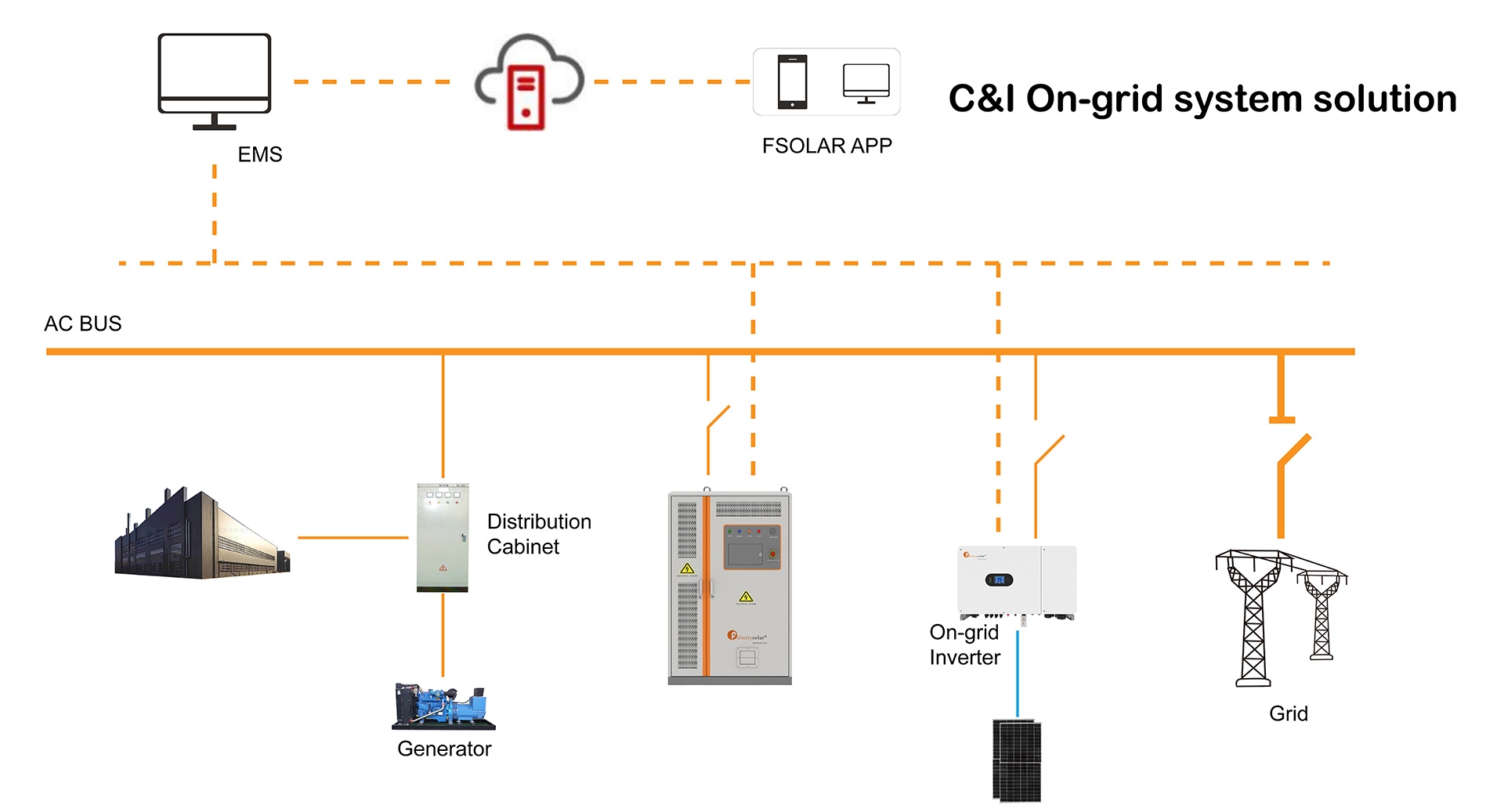
System Solution Diagram
100KW/232KWH Air Cooling System
1.Cost-Effective Solution
Air cooling systems use fans and natural airflow to maintain optimal temperatures, providing an economical solution for C&I energy storage systems with moderate energy demands. This method is simple, low-maintenance, and energy-efficient for less intensive applications.
2.Simpler Maintenance
With fewer components, air cooling systems are easier to maintain and have a reduced risk of failure. This makes them an excellent option for businesses looking for a reliable, straightforward cooling solution with minimal upkeep.
3.Ideal for Smaller Systems
Air cooling is most suitable for C&I energy storage applications with lower capacity demands or in cooler climates, where a less complex cooling system can effectively manage temperature control.
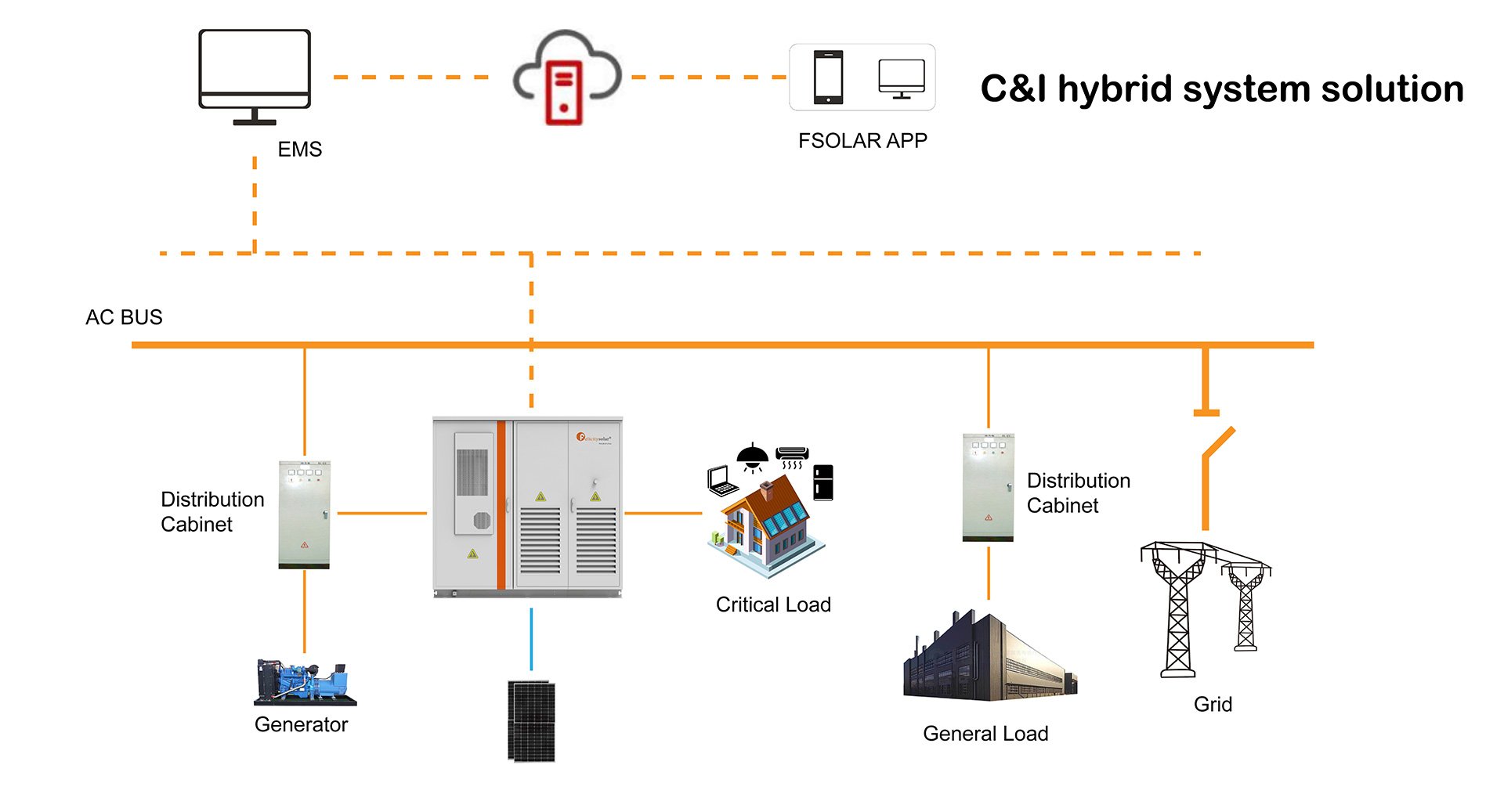
System Solution Diagram
Benefit and After-Sales Support
- Reduced Energy Costs
Through peak shaving and load shifting, our C&I energy storage systems can reduce electricity bills by up to 20–30% for commercial facilities. Real-time demand response and energy optimization help businesses avoid high peak charges. - Integration with Renewable Energy
Seamlessly store excess energy from solar PV or wind turbines and discharge during peak demand. This reduces reliance on the grid and lowers CO₂ emissions by up to 15–25% annually, promoting sustainable energy practices. - Intelligent Monitoring and Analytics
Equipped with advanced BMS (Battery Management System), real-time monitoring provides detailed performance reports, predictive maintenance alerts, and operational analytics to optimize energy efficiency and extend battery life.
- Reliable and Stable Power Supply
Advanced ESS energy storage systems maintain voltage and frequency stability, ensuring uninterrupted operations during grid fluctuations or outages. Typical system uptime exceeds 99.9%, making it ideal for critical industrial processes and commercial buildings. - Scalable and Flexible Design
Modular architecture allows capacity expansion from 50 kWh to several MWh, accommodating small commercial sites and large industrial plants. Businesses can scale energy storage as their energy demand grows. - Long-Term Reliability and Durability
Utilizing high-performance lithium-ion batteries with optimized thermal management (liquid or air cooling), the commercial and industrial energy storage system maintains efficiency above 95% over a lifespan of 10–15 years, ensuring stable and durable performance.
- 24/7 Technical Assistance and Real-Time Monitoring
Our dedicated support team provides round-the-clock remote and on-site assistance for ESS energy storage systems, responding rapidly to alarms or operational issues. The advanced monitoring platform tracks battery health, charge/discharge cycles, and system performance in real time, allowing early detection of potential issues and reducing downtime. - Preventive Maintenance and Warranty Coverage
Regular inspections, system diagnostics, and performance optimization maintain efficiency above 95%, extend battery lifespan, and ensure stable operation. Comprehensive warranty services cover all major components of the commercial and industrial energy storage system, providing prompt replacement and minimizing operational risk. - Staff Training and Performance Optimization
Felicitysolar offers on-site and online training for operational staff to ensure proper system usage and energy management. Scheduled software and firmware updates enhance the C&I energy storage system’s performance, improve energy efficiency, and help businesses maximize ROI over the system’s expected 10–15 year lifespan.
FAQ
What is a C&I energy storage system, and how does it work?
A commercial and industrial energy storage (ESS) system stores electricity from the grid or renewable sources like solar or wind. Stored energy can be used during peak hours or outages, optimizing energy usage and reducing costs.
Can ESS energy storage systems integrate with renewable energy?
Yes. ESS energy storage systems can store excess energy from solar panels or wind turbines and discharge it when needed, reducing grid reliance and lowering carbon emissions.
How scalable are commercial and industrial energy storage solutions?
C&I energy storage systems are modular and flexible, ranging from small capacities (50–100 kWh) for commercial sites to multi-MWh systems for large industrial facilities, allowing expansion as energy demand grows.